

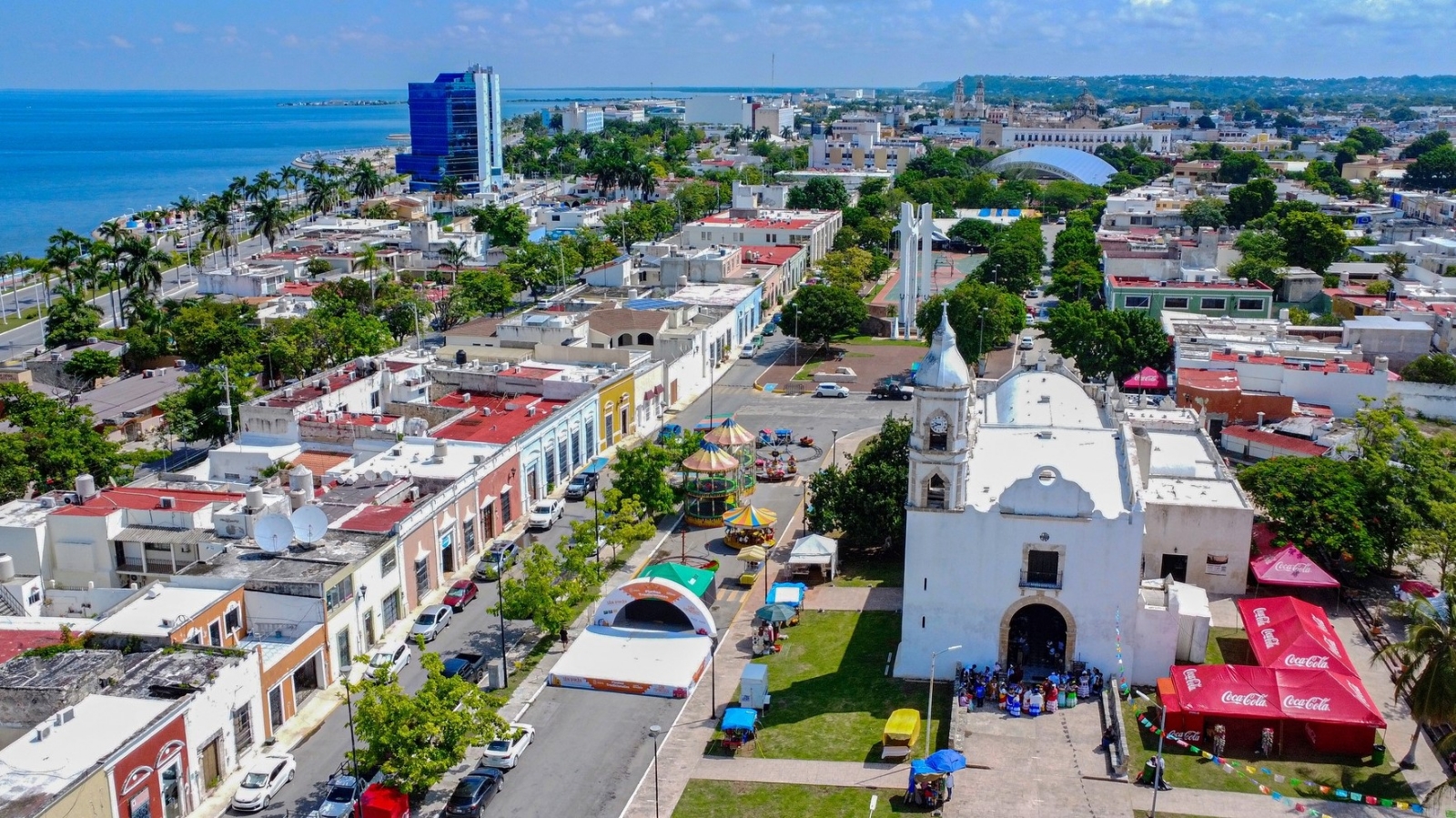
The barrios
beyond the walls.
The historic centre gets the photographs. The barrios get the life. These are the traditional neighbourhoods that grew around Campeche's fortified bastions — each one with its own church, its own market, its own tempo. All within walking distance of the walled city.
San Román.
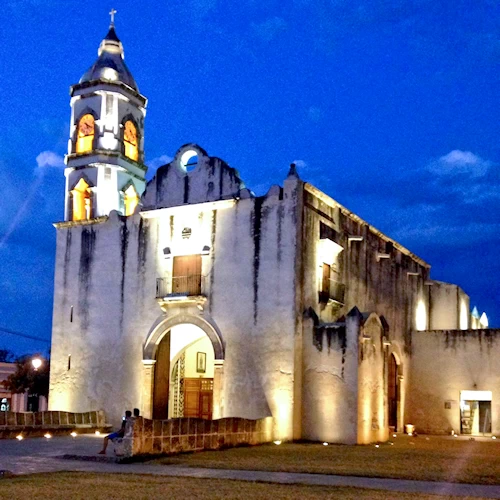
The most significant of Campeche's barrios and the one most worth seeking out deliberately. San Román is home to the Cristo Negro — a black ivory Christ brought from Italy to Campeche in 1565, and the subject of the city's most important annual festival (the Feria de San Román, August to September). The Iglesia de San Román sits at the centre of the neighbourhood, surrounded by everyday life — markets, taco stalls, children on bikes — that the historic centre traded away for tourism. Walk here in the morning. The neighbourhood market near the church is the best reason to arrive hungry. No Tren Ligero stop — a short walk from the walls.
Santa Ana.
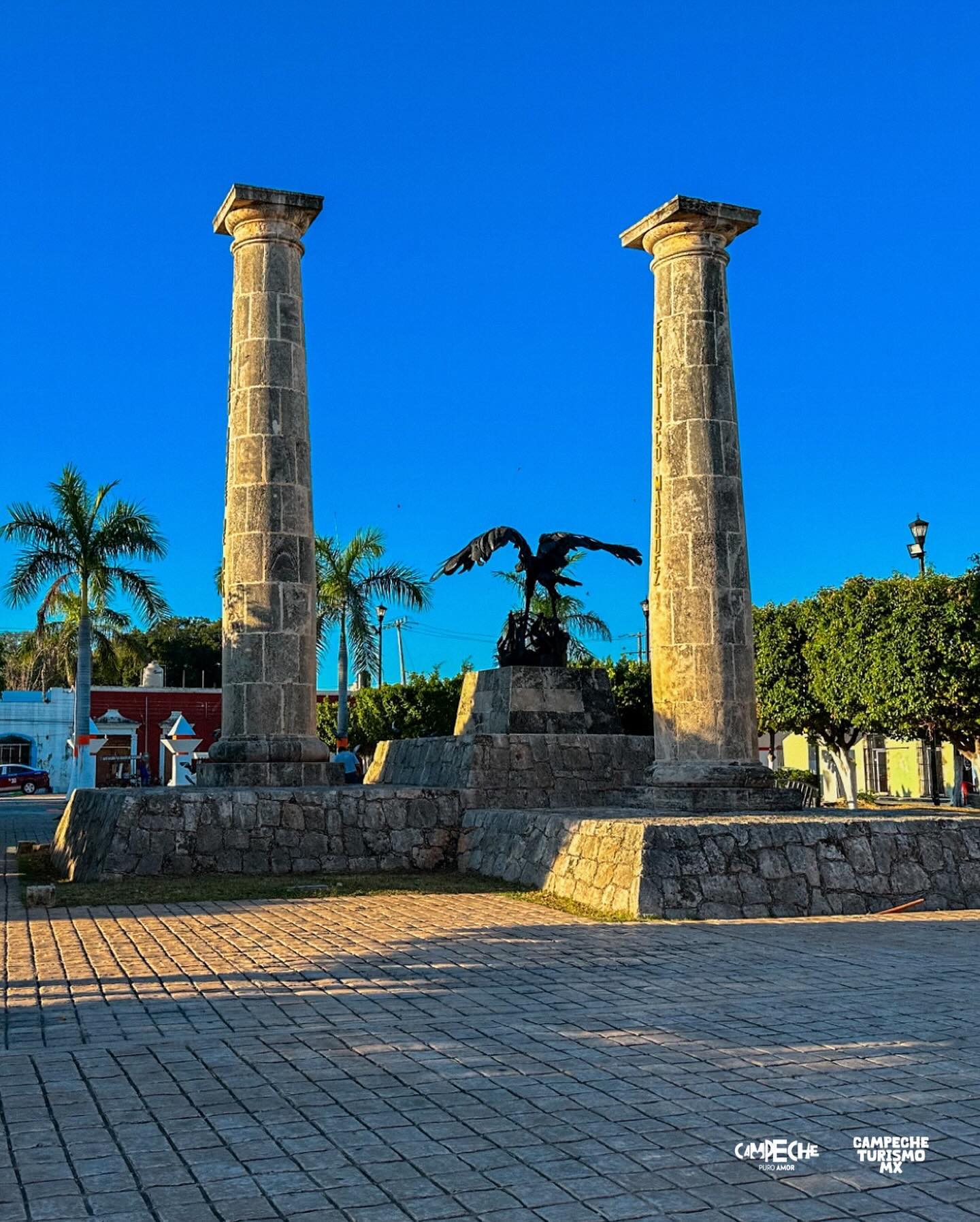
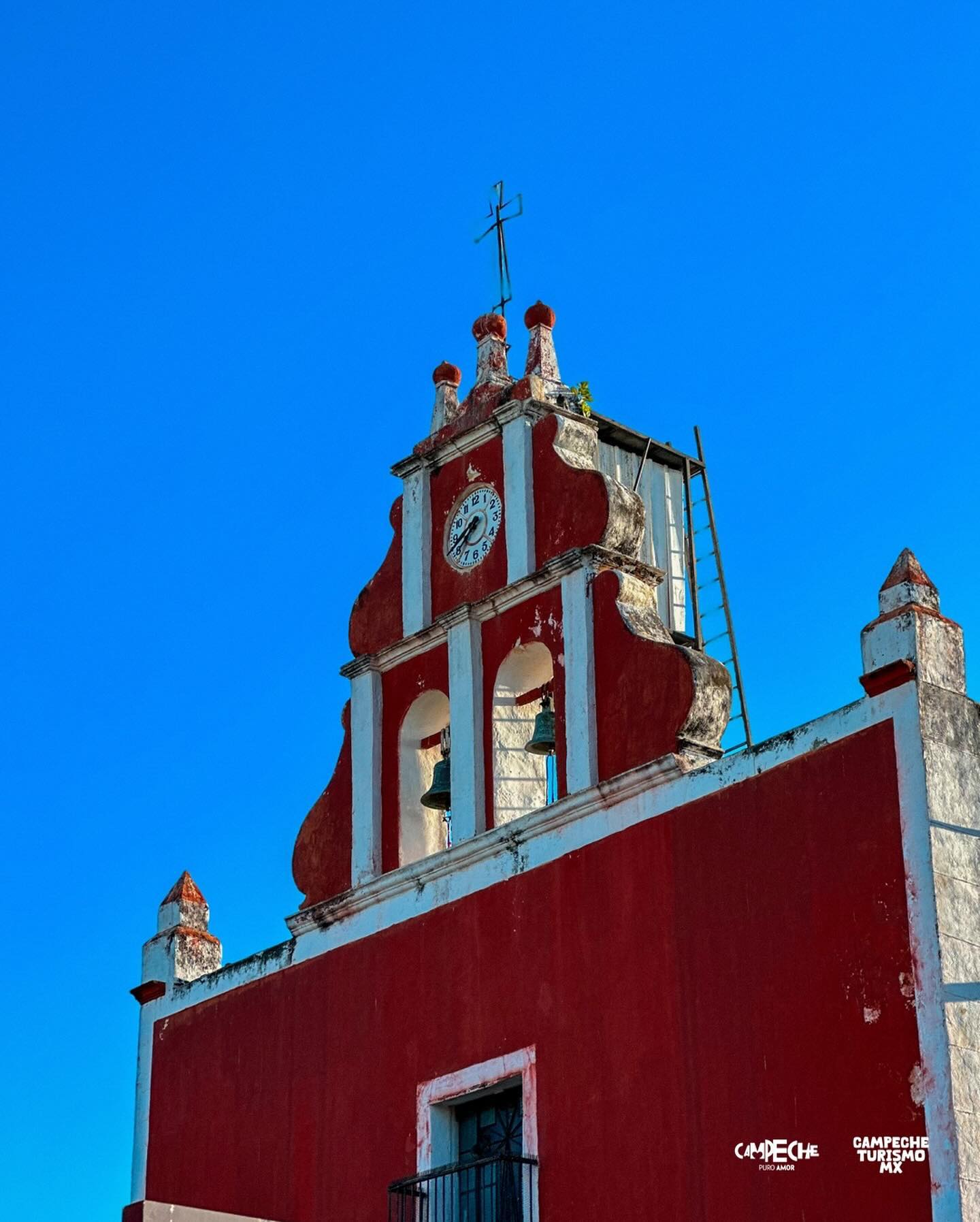
The barrio that Campeche's own residents tend to favour — which is always a useful indicator. The Plaza de Santa Ana is quieter than the Plaza de Independencia, surrounded by restaurants and cafés that serve locals rather than visitors. Corazón Contento has a location here, which tells you something about the neighbourhood. The Iglesia de Santa Ana faces a tree-lined square that slows down noticeably in the afternoon. No Tren Ligero stop — walkable from the walls in ten to fifteen minutes.
San Francisco.
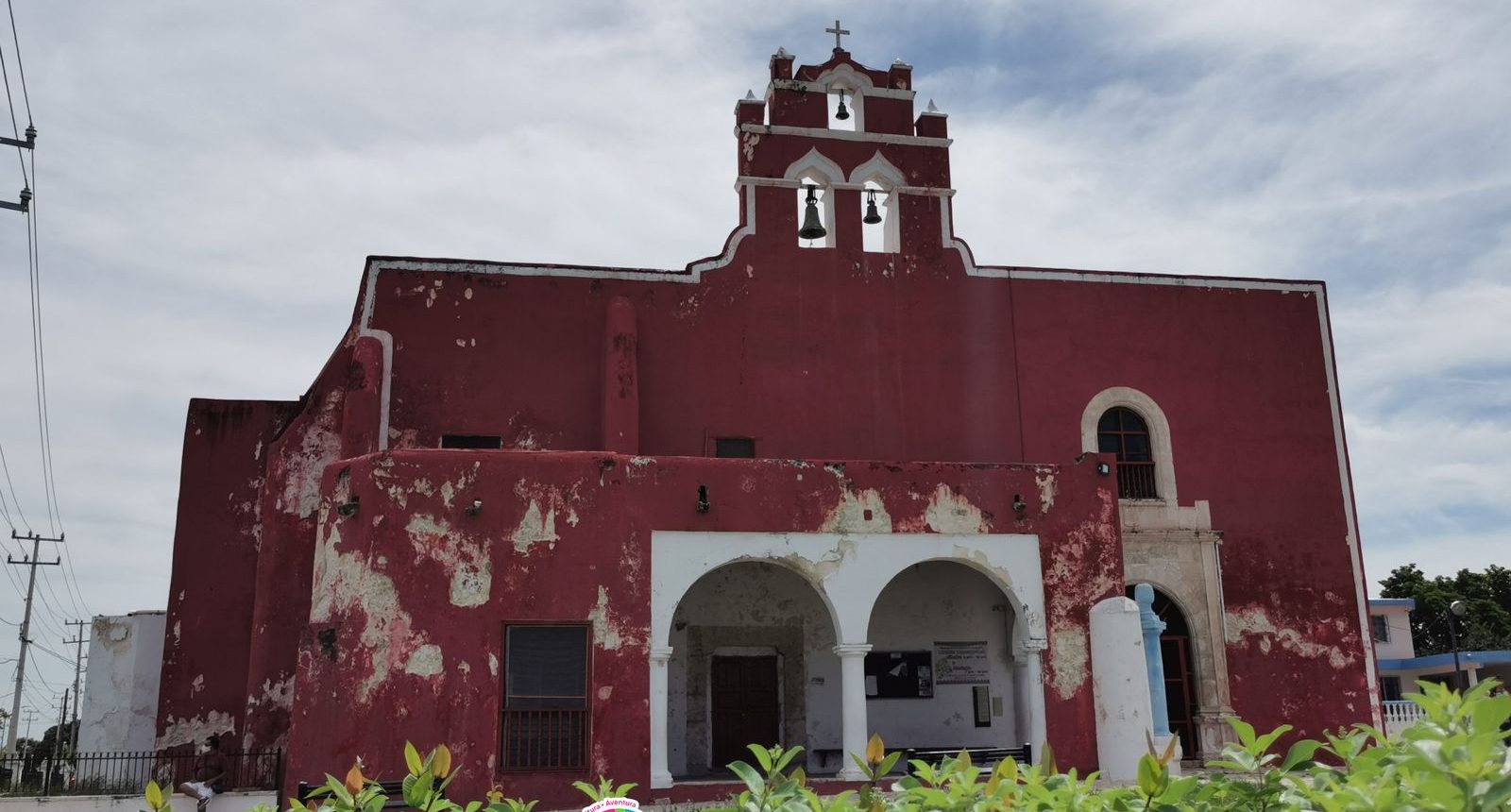 Iglesia de San Francisco — the neighbourhood anchor.
The oldest of the barrios, with roots in the earliest Franciscan presence in Campeche — predating the city walls. The Iglesia de San Francisco is the neighbourhood anchor, and the streets around it have a rougher, more working-class texture than Santa Ana. The church is genuinely old in a way that rewards a few minutes of attention. Tren Ligero stop: San Francisco.
Guadalupe.
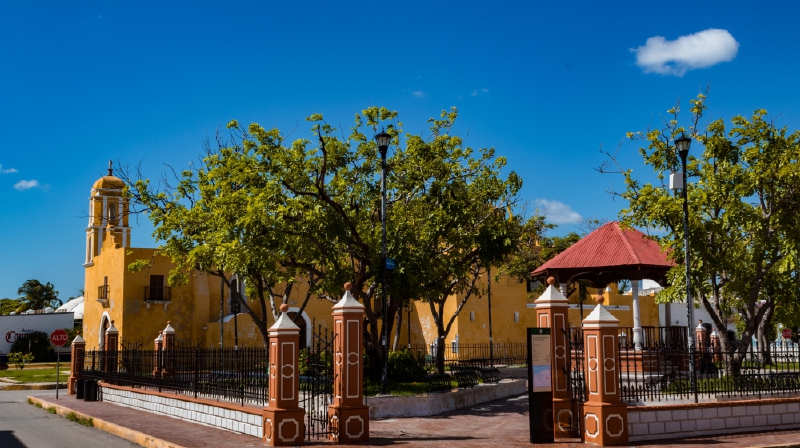 Ermita de la Guadalupe — the small chapel that names the barrio.
One of the smaller traditional barrios, sitting between the historic centre and San Román. The Ermita de la Guadalupe — a small chapel — gives the neighbourhood its name and its centre. Less visited than San Román or Santa Ana, quieter for it. Tren Ligero stop: Guadalupe.
La Ermita.
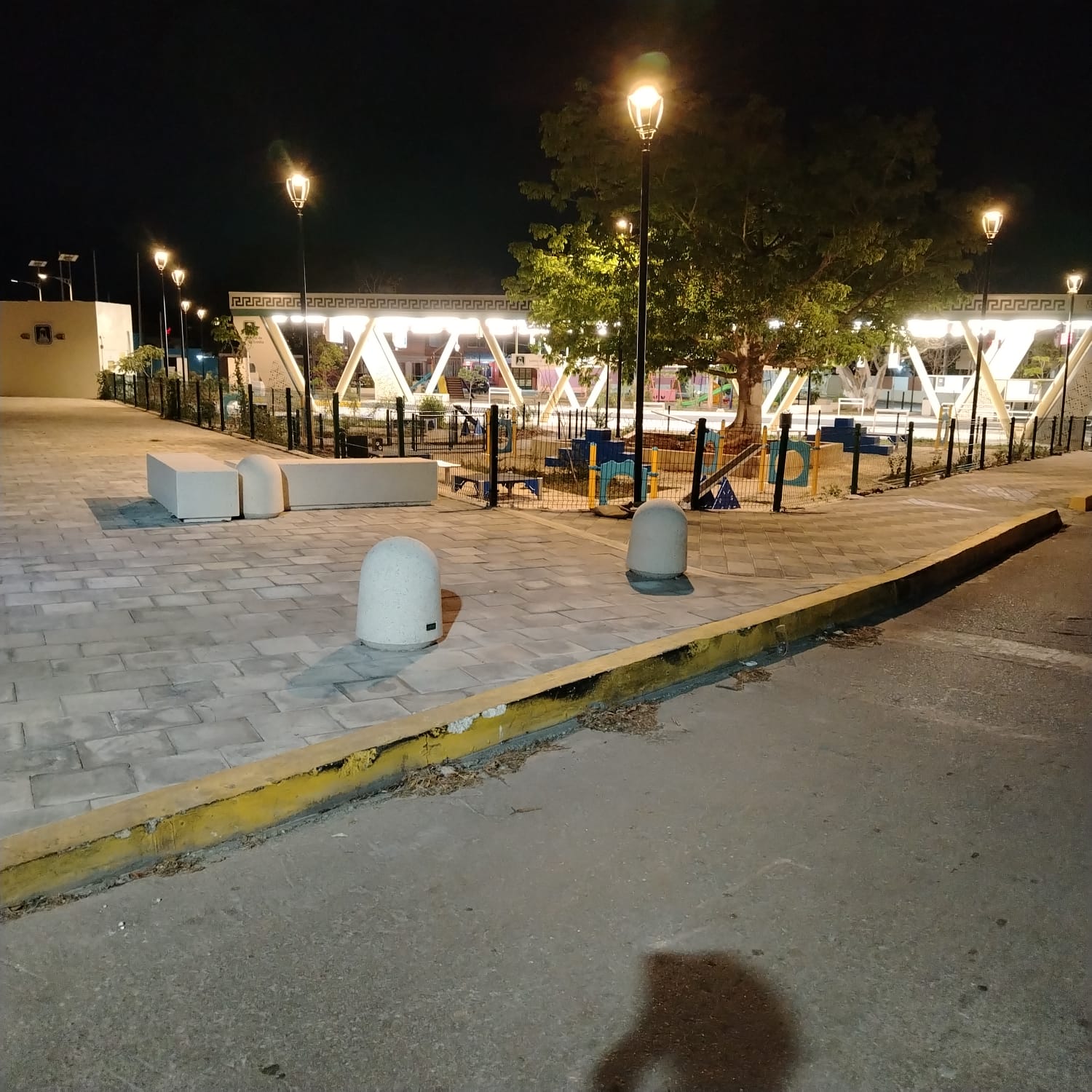 La Ermita — the barrio where the city isn't performing for anyone.
The southernmost of the traditional barrios — genuinely local in character, with a real neighbourhood market and the kind of street food that exists because residents want it, not because tourists expect it. Worth visiting if you have a full day and want to see what Campeche looks like when it isn't performing for anyone. Tren Ligero stop: La Ermita.